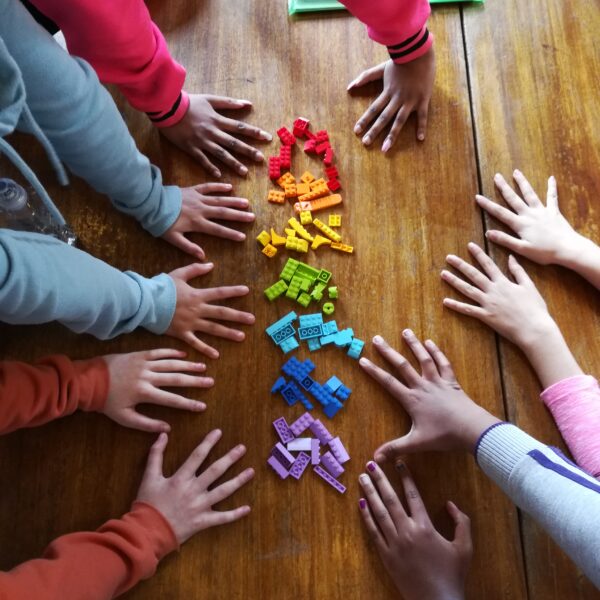

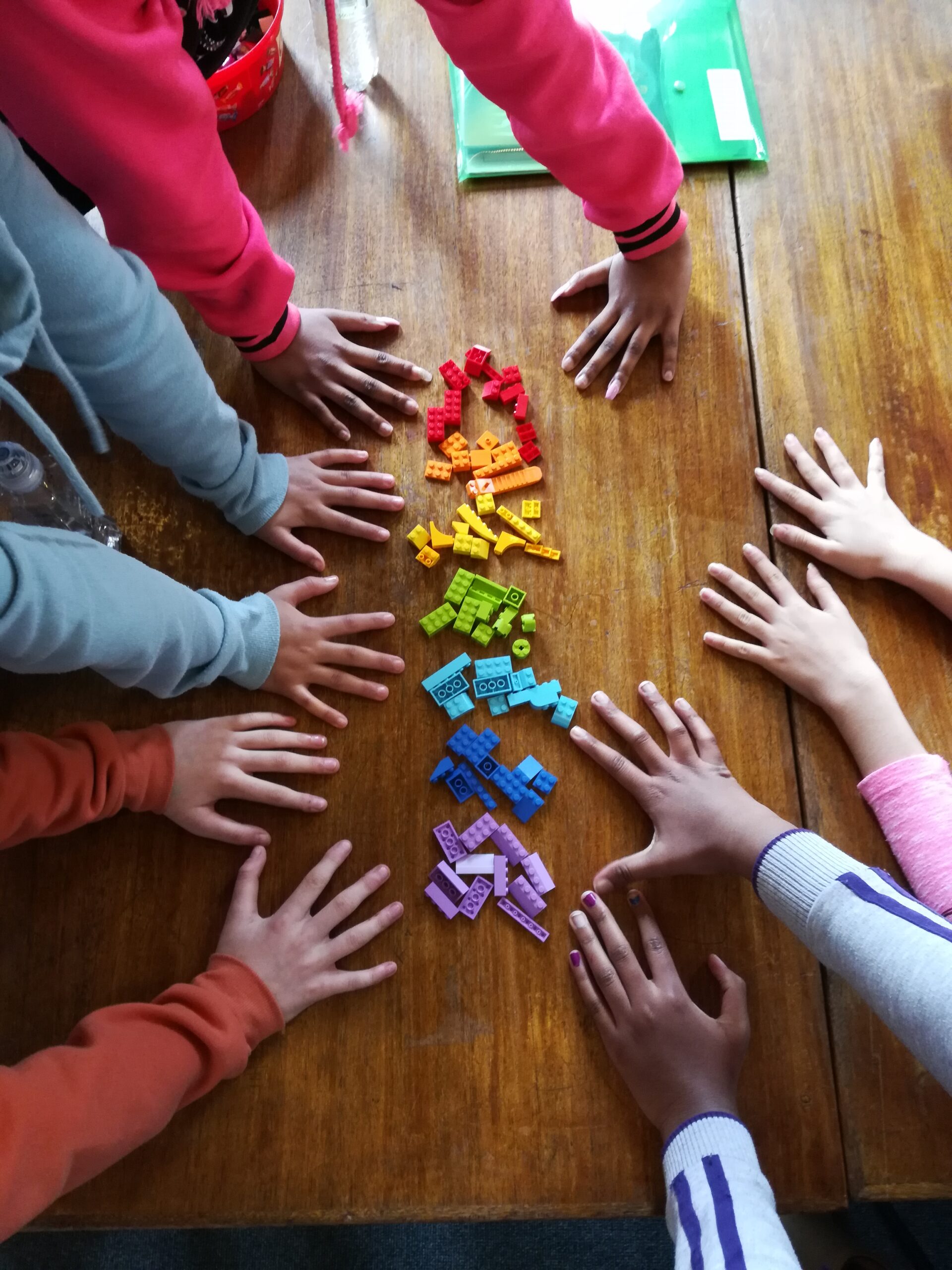
- The importance of touch for children
From the earliest stages of our lives to the latest ones, human touch is vitally important.
The sense of touch develops before we are even born. By as early as 26 weeks, the foetus responds to vibrations within the womb. In fact, touch is the first sense to develop. It doesn’t involve only the skin: it also allows us to feel pain and pressure inside the body. Touch helps newborns regulate their temperature and plays a vital role in their socio-emotional development.
At the other end of life, touch is often one of the last experiences we share with a loved one who is dying, offering comfort to both parties. Everyday life provides countless examples that highlight its importance: a hug when we are upset, holding a partner’s hand, or a pat on a student’s shoulder to show appreciation for their hard work.
When it comes to schools, however, these experiences may be restricted. As part of safeguarding, many schools have adopted “no touch” policies, intended to prevent accusations of inappropriate contact between staff and pupils. In the past decade, some schools have even banned hugging or hand-holding between children, stating that this helps pupils learn to respect personal space. In these cases, the concern is not only about intergenerational touch and potential accusations, but also about inappropriate contact between pupils themselves. Some Early Years settings have introduced similar policies to prevent behaviours such as biting, pinching, or hitting.
Safeguarding experts argue that “no touch” policies are not only designed to protect staff, but also to shield children from unwanted physical contact. Yet there are occasions where physical touch is necessary, such as providing first aid, during PE lessons, or when teaching music and demonstrating how to use an instrument. In 2010, Education Secretary Michael Gove clarified that there were “no nationally imposed rules preventing teachers from touching pupils,” but some schools had adopted these policies out of fear of complaints. Children’s Rights Alliance spokeswoman Carolyne Willow responded that there are also situations where restraint is essential, sharing her own experience of spending an entire break restraining a boy to prevent him attacking another pupil. She explained that, in the end, he calmed down – but it had seemed the only possible option.
This is particularly relevant for students with special educational needs or mental health difficulties. For example, one Year 11 student with Autism Spectrum Condition was unable to calm down until someone hugged him. Some educators argue that these policies may help reduce bullying. However, threats and abuse can occur through words, not just actions. Others believe physical contact itself distracts from lessons and should therefore be avoided.
On the other hand, many parents and professionals argue that “no touch” policies risk having the opposite effect. They may fail to teach children how to navigate real-world social interactions, limit the development of social skills during formative years, and suppress emotional expression. Some critics even view such policies as an infringement of children’s rights, warning that they can harm social development and mental health.
This remains a controversial issue. Our culture often prioritises risk avoidance and, at times, seems to lack common sense. In recent years, however, a new approach has emerged: “positive touch”.
According to positive touch policies, physical contact is considered essential for providing sensitive, high-quality care and education. Touch is not viewed as negative, but as “positive” when used appropriately, and is recognised as a basic human need. Examples of appropriate positive touch include:
- First aid, such as cleaning wounds or applying plasters.
- Responding to a child’s initiated contact, such as returning hugs or holding hands.
- Reassuring and comforting children when they are upset, worried, or in need of guidance.
- Offering praise, for example, reinforcing “well done” with a gentle pat on the shoulder.
- Ensuring safety, such as crossing the road together or preventing a child from hurting themselves by holding their wrist, arm, or hand.
(Source: UK2Learn – Positive touch policy)
Teachers, teaching assistants, support workers, and other staff should feel able to build caring and positive relationships with children without fear of unfounded accusations. At the same time, they should remain aware that some students may find physical touch unwelcome due to their personal background or history.
Equally, schools should acknowledge that staff communicate in different ways and may themselves need to use touch for support. For this reason, the use of touch should be openly discussed and reviewed within staff teams. Above all, staff must remain sensitive to verbal and non-verbal signals that indicate whether a child seeks physical comfort or, instead, prefers not to be touched.
What is different now?
During the pandemic, we were forced to dramatically change our lifestyles and adopt social distancing. Maintaining physical distance is difficult for adults, and even harder for children. Touch is a natural way for children to communicate with both peers and adults, so explaining that holding hands or hugging could now be considered “wrong” or “not permitted” has not been easy. Some cultures are also more physically expressive than others, which made these restrictions even more challenging.
After months of uncertainty, many children eventually returned to school. Although most were glad to see classmates and teachers again, the new safety rules – such as limiting contact and maintaining distance – have been difficult to follow and sustain.
What will be different in the future?
This article was originally written in 2020, at the height of the pandemic, when schools were reopening after lockdowns. The reflections below capture the concerns of that specific moment. Things have since changed, but they remain an important reminder of how disruptive that period was for children and young people.
Since September 2020, children and young people returned to schools, early years settings, and colleges. Kitchens and canteens reopened, but pupils were often kept in class or year group “bubbles”, with contact between groups restricted. At the time, there was a real concern about how these long-term changes might affect children’s social and emotional development.
What we do know is that children with special educational needs (SEN) have struggled the most to re-adapt. Across all year groups, we have also seen higher levels of anxiety and difficulties with emotional regulation.
Looking ahead, it will be crucial to explain and discuss safety rules with children in ways that they can fully understand. Group discussions, child-friendly explanations, and multilingual resources will all be important. Equally important is framing these rules not as something imposed on children, but as something created with them – emphasising that by “looking after each other”, we are protecting the most vulnerable members of our community.
Finally, it’s important to remind children that care and affection can be expressed in many ways. Even when hugging and handshakes are not possible, they can still build strong connections with classmates and teachers by offering “virtual hugs” or simply expressing appreciation through words.
Although this article was first written in 2020, during the height of the pandemic, it is important to recognise how much has shifted since then. The most challenging times of social distancing and lockdowns are now behind us, but the impact on children’s resilience, emotional wellbeing, and sense of safety still lingers. Children and young people continue to need comfort and reassurance, though now schools and families can focus more on rebuilding trust, closeness, and healthy forms of connection. Teachers and school staff also need ongoing support to help students recover from experiences of trauma, loss, and disrupted routines. In this context, it is more relevant than ever to think not only about “positive touch” policies, but about developing “safe and positive touch” approaches that balance safeguarding with children’s fundamental need for comfort, belonging, and connection.
Sources:
Communicating through touch: Touching during Parent-Infant interactions – Dale M. Stack, Ph.D, Amelie D. L. Jean.
https://www.gov.uk/coronavirus/education-and-childcare
https://www.bps.org.uk/coronavirus-resources/public/back-to-school
https://www.bbc.co.uk/news/education-11458137
https://www.uk2learn.com/wp-content/uploads/2020/01/UK2Learn-Positive-Touch-Policy-reviewed-2020-January.pdf